
Soil Improvement Techniques for Construction
Soil improvement techniques for construction are used to enhance soil strength, stability, and load-bearing capacity to support building structures.
Engineers encounter different kinds of soil during construction, such as contaminated, expansive, compact or loose. Soil improvement techniques are necessary to prepare the soil before construction, as they ensure the durability of the building for decades.
Importance of Soil Improvement Techniques for Construction
Soil improvement techniques are a crucial procedure used in the construction industry.
They are mainly used to prevent soil liquefaction risks in earthquake-sensitive regions. It improves the soil’s density, stiffness and load-bearing capacity to protect it from damaging the building structures.
These techniques are used to construct roads, complexes, bridges, airports, etc. If soil improvement techniques are not used, the buildings above will face issues like foundation settlement, structure collapsing or cracking.
The building may tilt or sink in some areas due to uneven settlement. These issues threaten the lives of the people inside the building.
Some Common Soil Improvement Techniques
Following are some soil improvement techniques that are commonly used before construction:
Compaction
Compaction is a core soil improvement technique that densifies soil by removing air voids present in it. Air voids are empty spaces and pores filled with air. Compaction technique has various types:
- Dynamic Compaction: A heavy weight of 5 to 10 tonnes is dropped from height to press the ground.
- Vibratory Compaction: Vibration is used to densify loose or granular soil to increase its load-bearing capacity and stabilise it for construction.
- Explosive Compaction: Explosive charges are detonated at depths that create shock waves. The shockwaves compact the loose or granular soil and expel water, increasing stiffness and strength.
Grouting
Grouting is another soil improvement process in which a fluid-like mixture of sand, cement and water, also called grout, is injected into the ground with high pressure to fill up the cracks, gaps, or voids.
This technique is used to increase the strength of the ground and reduce the soil settlement and permeability. Grouting is a valuable ground improvement method for construction.
Pre-Loading
A pre-loading technique is used to improve the load-bearing capacity of soil. It is also used to enhance the future settlement of soil by applying a temporary load to the ground before construction.
A surcharge, like a pile of soil or water, is placed on the ground to press the soil. It allows settlement to occur before construction, providing a sturdy base for the building.
Geo-synthetics
Geo-synthetics involve geotextiles, geogrids, and geomembranes to stabilise and protect the soil.
- Geotextiles are permeable fabrics made of synthetic fibres like polypropylene or polyester. They provide separation, filtration, and drainage in soil.
- Geogrids are open grid structures made from polymers with high tensile strength. They are used for soil reinforcement, load distribution, and slope stabilisation.
- Geomembranes are impermeable barriers made from flexible polymeric sheets (HDPE, LDPE, PVC).
They prevent leakage of liquid and gas, shield underlined materials from environmental damage, and provide waterproofing.
Geosynthetics are used in building roads, retaining walls, embankments, basins, ponds, etc. They can effectively protect the soil layers from external elements and reduce maintenance needs.
Geo-synthetics are used in various ground improvement techniques as they are effective for several types of soils, like cohesive and non-cohesive soil.
Vibroflotation
Vibroflotation is a ground improvement technique that densifies loose, granular soils to enhance their load-bearing capacity before construction.
In this technique, a vibrating probe called a vibroflot is used to compact the soil through vibration. Vibrofloation decreases soil settlement and compressibility, making it more suitable for construction.
Soil Mixing
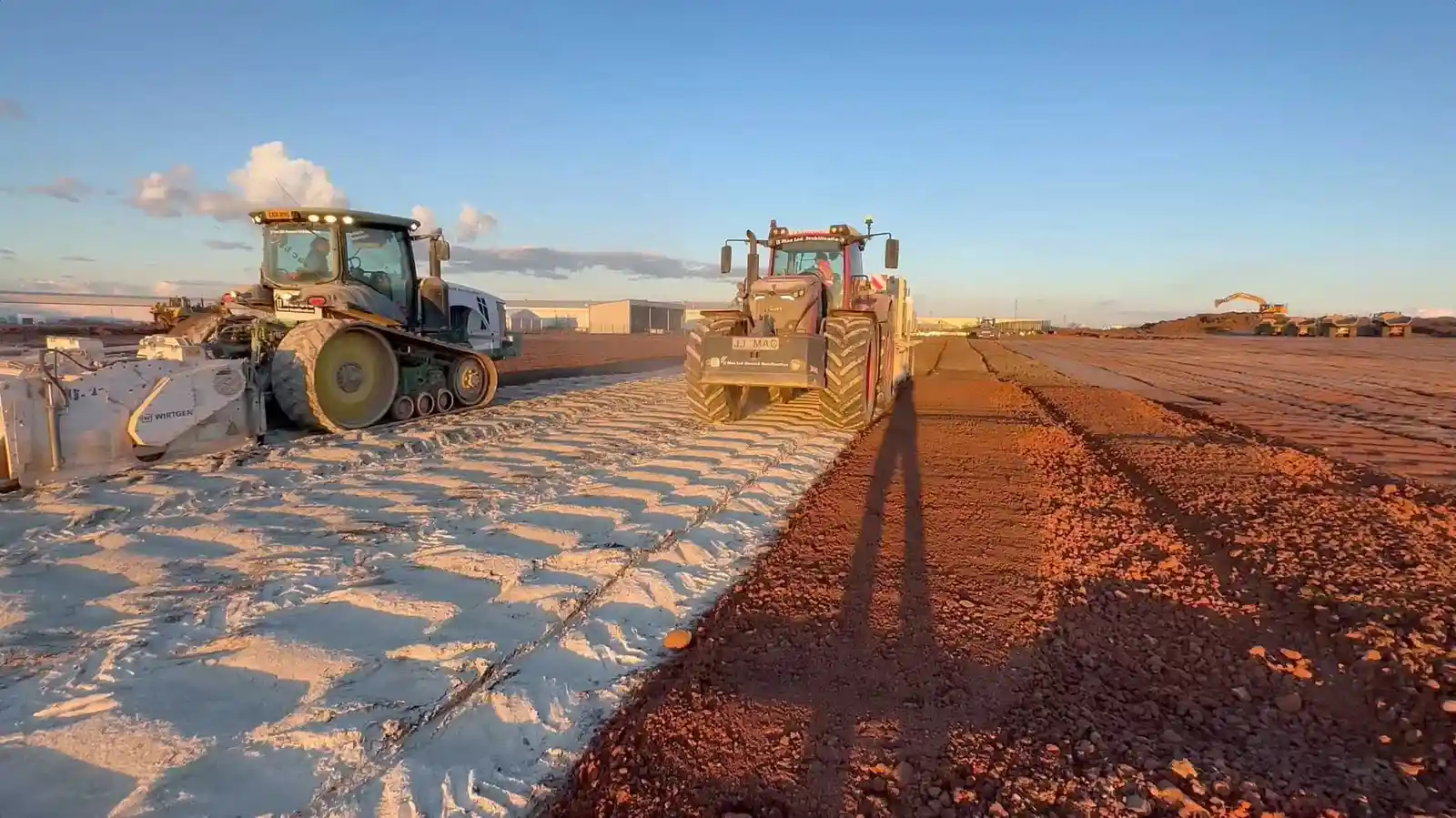
In the soil mixing technique, the in-situ soil is mixed with cementitious materials or other stabilising agents to create a stronger soil mass.
This technique improves the soil strength and reduces compressibility and permeability compared to the original soil.
Vertical Drainage
Vertical drainage is a technique that uses pre-fabricated vertical drains (also called wick drains) to consolidate the soft, saturated and compressible soil before construction. These drains are engineered drainage strips that create underground pathways for pore water to escape.
This way, they shorten the distance water needs to travel to be removed from the soil. Vertical drainage technique accelerates the settlement of the ground, allowing construction to begin sooner.
Which Soil Improvement Technique to Use for Your Project
Several factors influence which soil improvement technique you should choose for your construction sites. Such as soil type and its properties, the project’s load requirements, budget availability and project timeline.
Sustainable and environment-friendly soil improvement techniques are preferred generally.
Conclusion
Soil improvement techniques are crucial for enhancing soil properties before construction, increasing its load-bearing capacity, and ensuring the stability of structures built on challenging soil conditions.
Selecting the appropriate soil improvement technique depends on factors like soil type, site conditions, project requirements, and the availability of budget and resources.
Also, you should sign a contract with reliable and experienced construction companies, as labour quality can’t be ignored in construction projects.